Category

Engleză

Category

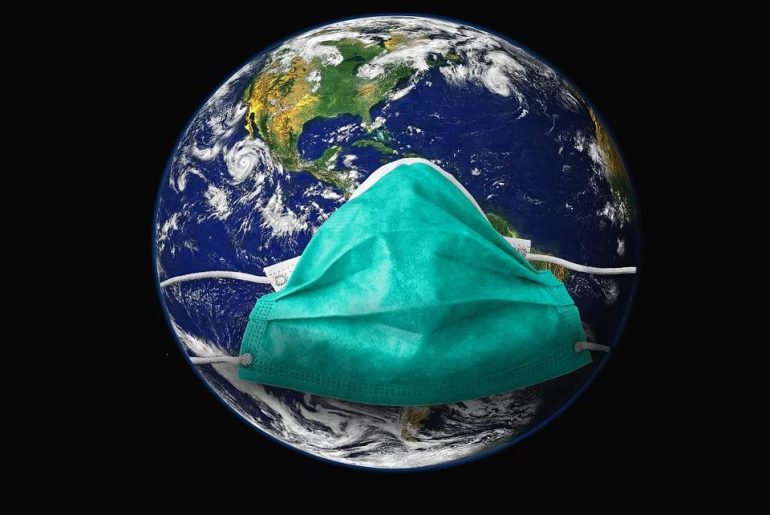
The pandemic caused by COVID-19 has shocked the whole world and is another huge blow to the world economy after the financial crisis that erupted in 2008. A sanitary crisis is interweaving with a very severe economic and social crisis. Although most economies seem to have got out of the deep hole caused by The Shutdown, a steady recovery is likely to be difficult and painful, surrounded by big uncertainties and contradictory effects. Much of economic activity is badly hit, not a few companies may not be able to survive, unemployment has been growing rapidly[1], and repair efforts will be time consuming.

The coronavirus pandemic has stunned Europe, and indeed the entire world. Although the likelihood of this kind of pandemic was sounded off by not a few high-profile voices quite a while ago, its devastating impact reveals how unprepared medical systems and how defective our prevention schemes have been. But, like in times of war, an unprecedented resource mobilisation has been mounted to fight the coronavirus, while governments and central banks have summoned a wide range of tools to mitigate the impact of the lockdowns.

Three words can mean a lot, both in someone’s love life and in financial markets, especially when it comes to major central banks. These words are “Whatever it takes” and they were voiced by former ECB President Mario Draghi back in July 2012, in a bid to persuade investors that the European economy was not in such dire straits as it seemed.

In addition to major health issues, Covid -19 creates major economic problems. The risk of a deep global recession is very high. It is a shock that reduces supply, especially through the shock on the labor force, through illness or social distancing, resulting in the closure of many activities in different industries.

Reforms in and of the euro area, to make it robust, would be more than welcome in accession candidate countries. As for its part, the Romanian economy needs to achieve a critical mass of real convergence and control its imbalances on a sustainable basis in order to enter the exchange rate mechanism and, after that, join the euro area under auspicious terms.

Romania belongs to Europe not only in geographical terms, but also thanks to its one-of-a-kind cultural features. Standing at the confluence of the East and the West, being the sole Christian Orthodox nation among the Latin peoples, the sole Latin-rooted speaking people in the Orthodox East and a cultural “melting pot” in itself, Romania boasts a culture that carries a valuable historical legacy. The National Bank of Romania is definitely a part of this legacy and was one of the key drivers of modern Romania.